
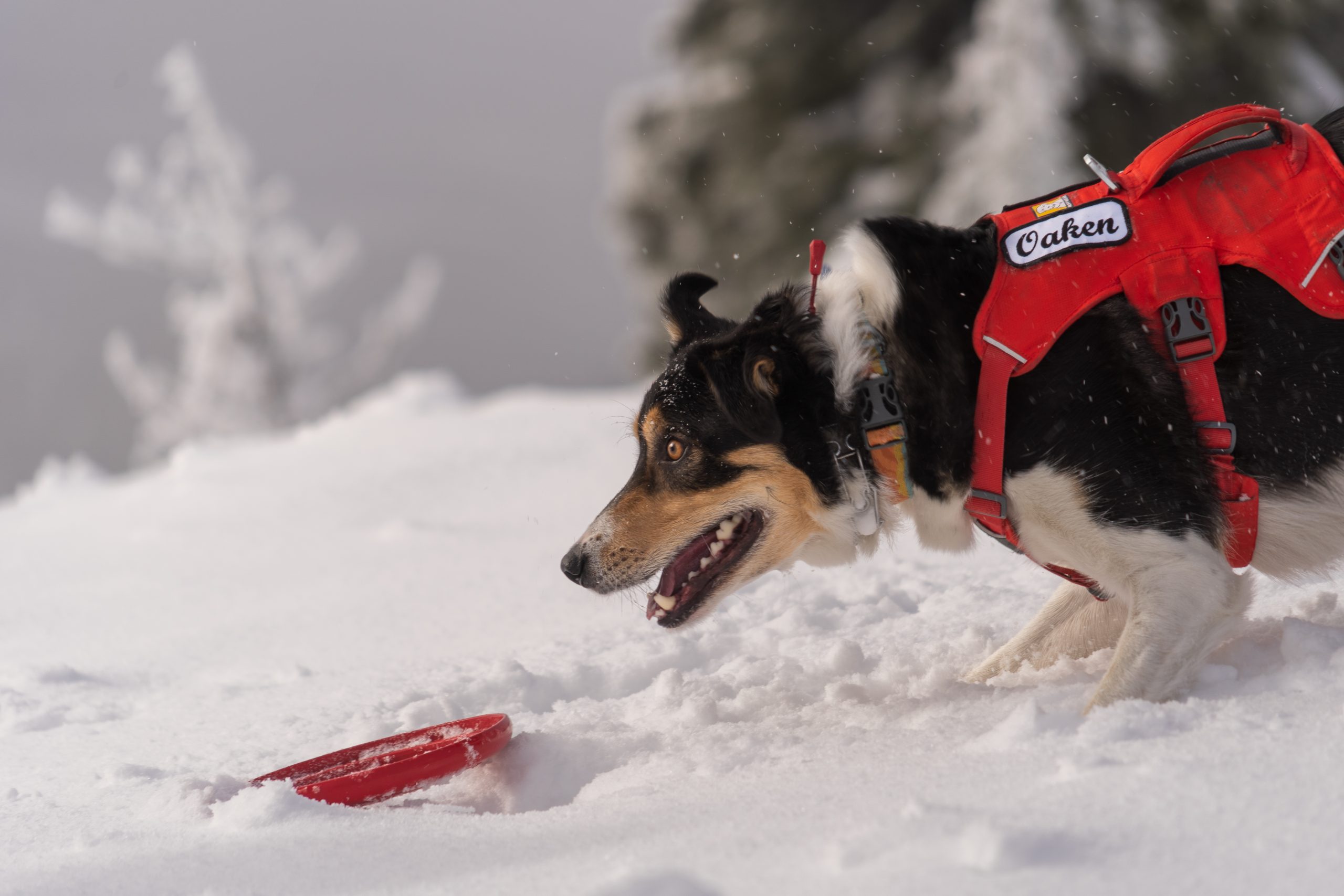
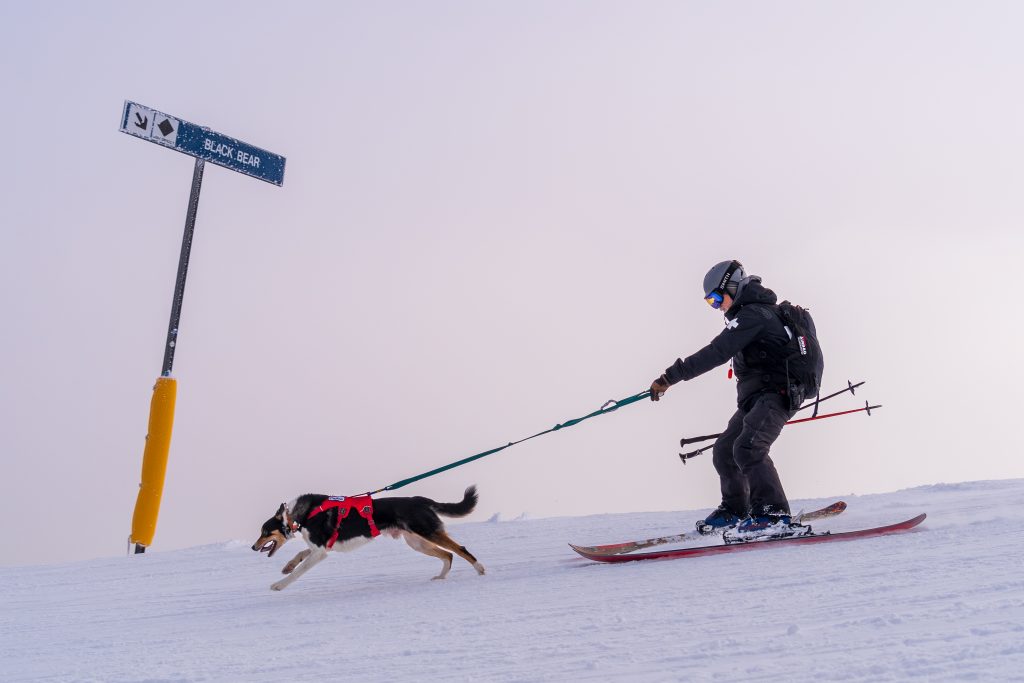
Oaken, a 4-year-old border collie, charges down a snowy slope from the summit of Big Mountain, pulling his handler, ski patroller Lloyd Morsett, behind him on skis. The dog brims with excitement and focus, a look in his eyes indicating he knows exactly what is coming.
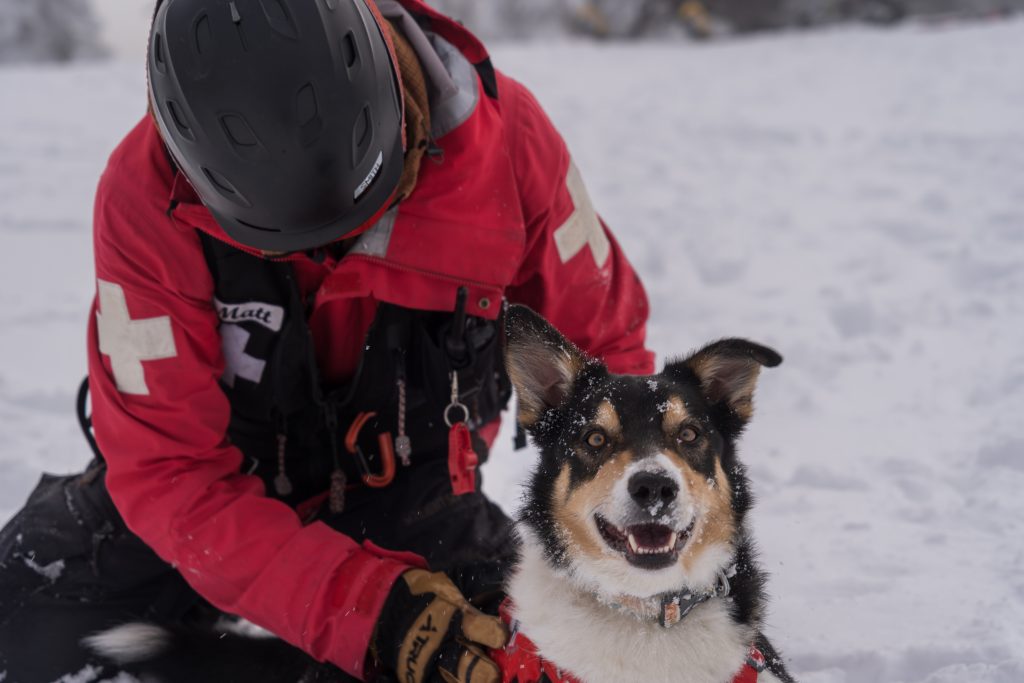
Together, the pair arrives at a scene just off the trail where another patroller, Matt, waves them down frantically. Matt explains the situation quickly as Lloyd clings to Oaken's leash. Matt believes his friend was buried in a tree well and is nowhere to be found. Lloyd unclips the leash from Oaken's bright red harness and the search is on.
The pup breaks into a sprint with his nose trained to the surface of the snow. Within seconds, he locates a scent and begins to dig. A helmet slowly becomes visible as Oaken, Matt and Lloyd all work together to unearth the patient (a third patroller, Edie). She's alive and well.
Mission accomplished!
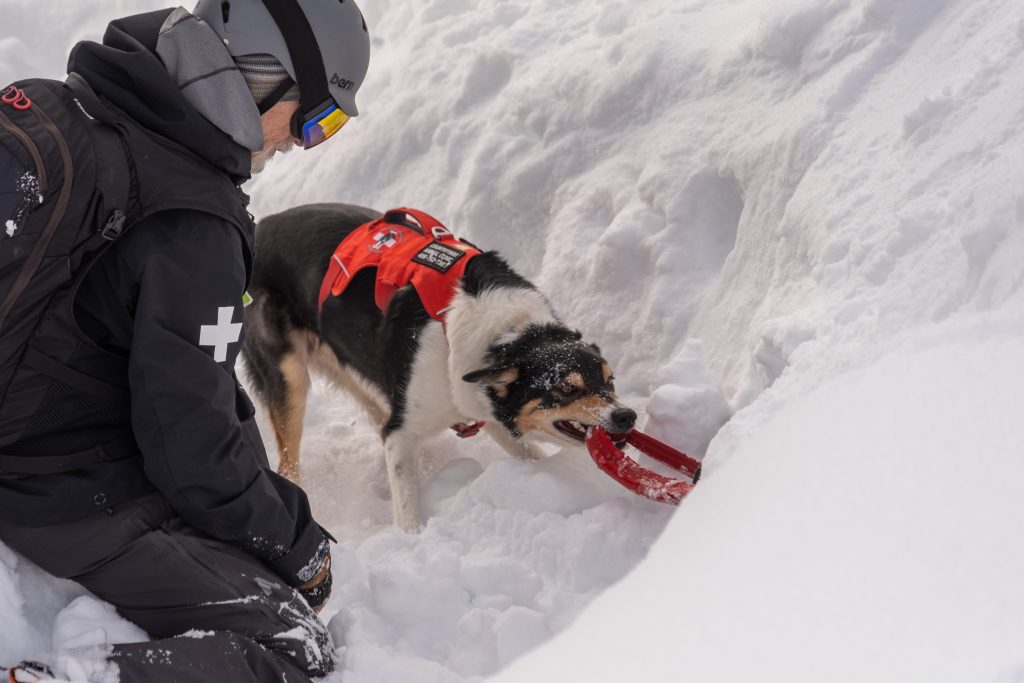
This training scenario is a typical day at work for an avalanche dog like Oaken. He routinely runs through simulated snow burials and avalanche situations to prepare for real emergencies.
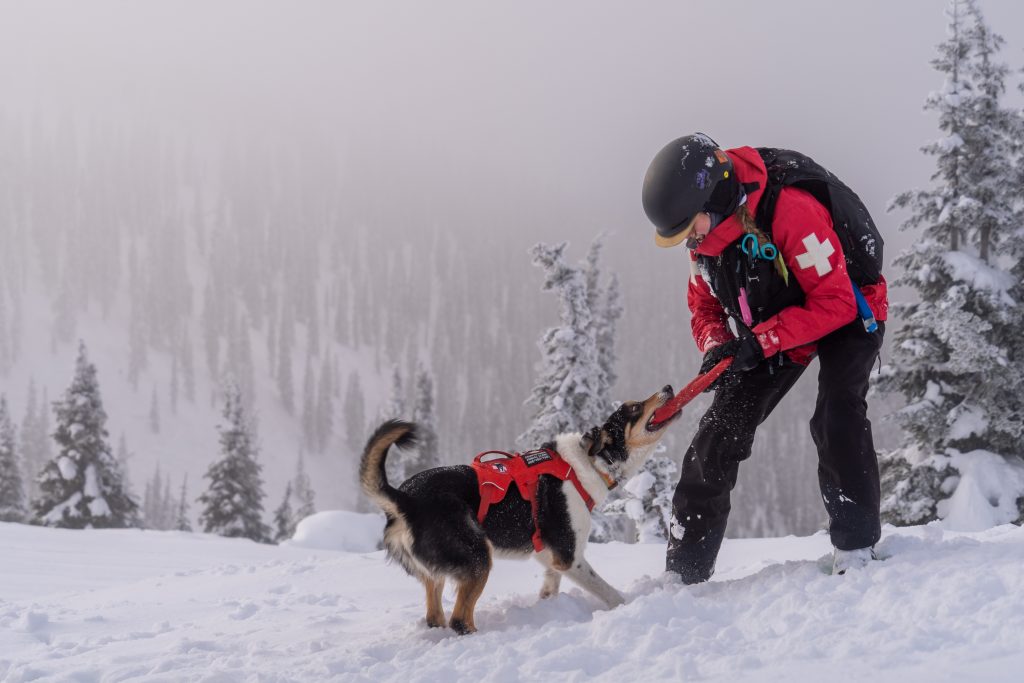
Oaken is rewarded for his searching skills with a game of tug and frisbee with the patrollers, as well as enthusiastic encouragement and cheers. Training is structured as a game: Once the dog finds the buried person, it is rewarded with enthusiastic praise and a tug toy.
Within resort boundaries, it's extremely rare for someone to be injured or buried in an avalanche, as ski patrollers constantly monitor conditions and take steps to mitigate avalanche hazards. But deep snow and tree wells — hidden voids that form around the bases of tree trunks — can also pose serious risks.
That's why dogs like Oaken are key players on ski patrol teams. Time is critical in burial scenarios; studies show that about 90% of people found within 15 minutes survive, while survival drops to around 30% after 35 minutes. And dogs can search an area far faster than humans, covering the ground of roughly 20 people in a fraction of the time. They can also reliably detect the scents of people buried up to 2 meters deep.
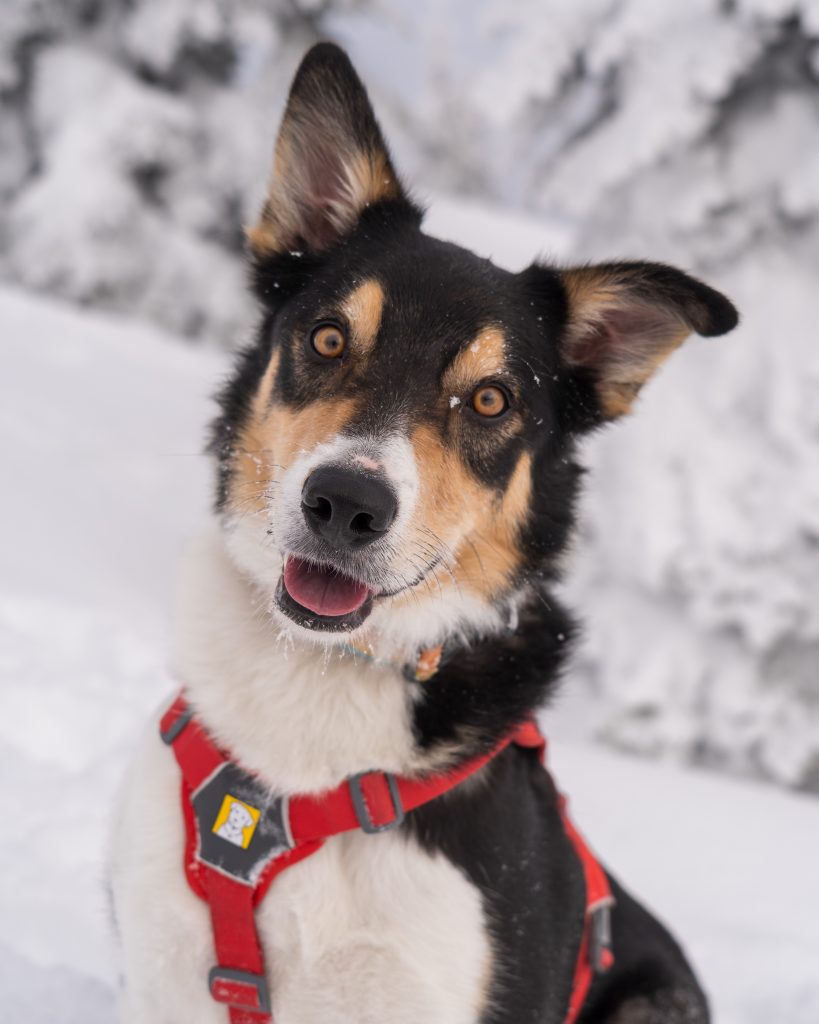
Oaken is currently one of two avalanche dogs at Whitefish Mountain Resort, along with Skook, another 4-year-old border collie belonging to patrol manager Kate Atha. Oaken and Skook live and work alongside ski patrollers and play a vital role in patrol operations.
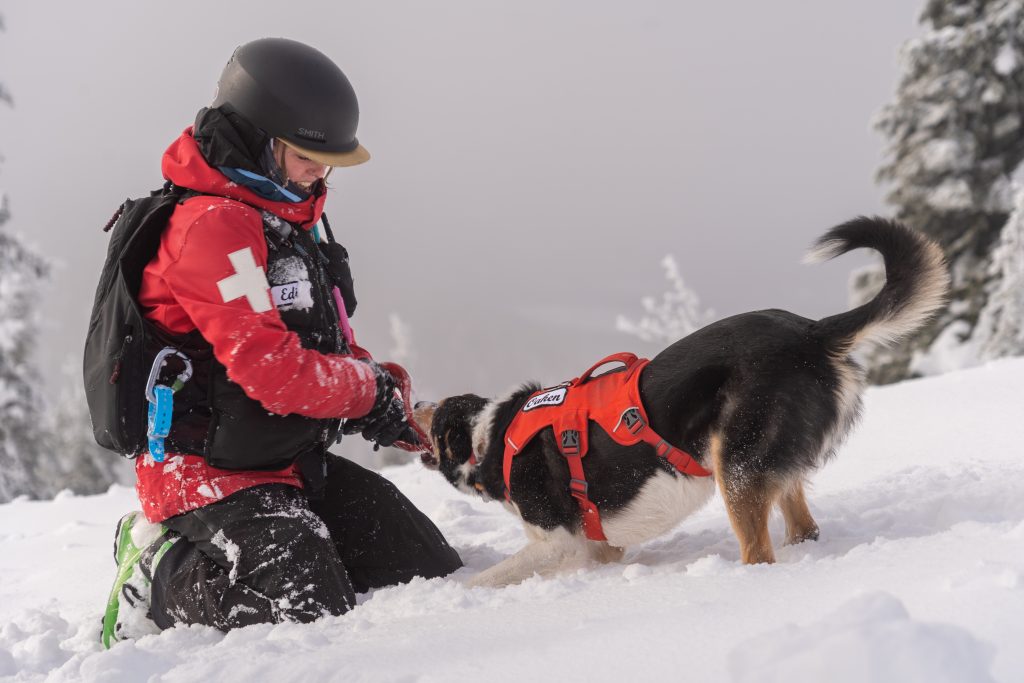
Their training began when they were puppies, starting with basic obedience and progressing to navigating chairlifts, snowmobiles, groomers and skiers. Familiarity with these stimuli allows the dogs to remain focused during real rescue scenarios. Intense and driven, these dogs are equally enthusiastic about work and play.
If you see these pups around the mountain feel free to say hello, but don't be surprised if they're too busy to hang out — these are dogs on the clock!
Avalanche Dog Historical Facts
Dogs have supported medical and operational efforts in high-stress environments for centuries. In the 1600s, monks at the Hospiz auf dem Grossen Sankt Bernhard in Switzerland began breeding dogs to locate travelers after heavy snowfall obscured the mountain pass leading to the monastery. The institution and its dogs have been credited with saving over 2,000 lives during its long history. By selectively breeding large, strong dogs from nearby communities, the monks developed what became the first St. Bernard dogs, optimized for mountain rescue.
One of the most famous of those dogs, Barry, is credited with saving around 40 lives. Known for his strength and athleticism, Barry's legacy is partly surrounded by myth. The breed itself was not the same as the modern St. Bernard. After a sharp population decline in the 1820s, monks bred the remaining dogs with Newfoundlands, creating the larger, heavier St. Bernard that is commonly associated with mountain rescue today.
There are rare cases of long-term survival among avalanche victims. One notable example is the catastrophic 1982 Alpine Meadows avalanche in California, where Anna Conrad Allen survived five days buried in snow and debris before being located by a trained German shepherd named Bridget. At the time, search dogs in the United States were usually sent out long after an incident — rarely to find survivors. Anna Conrad became the first person in the United States to be recovered alive by a dog, which helped change perspectives on how dogs could be used in avalanche scenarios.
Margot Collins was a Whitefish Mountain Resort snow reporter for the 2025/26 ski season.